Income is not affordability: R12,000 after the basics.
In business they say turnover is not profit. The collections version is that income is not affordability.
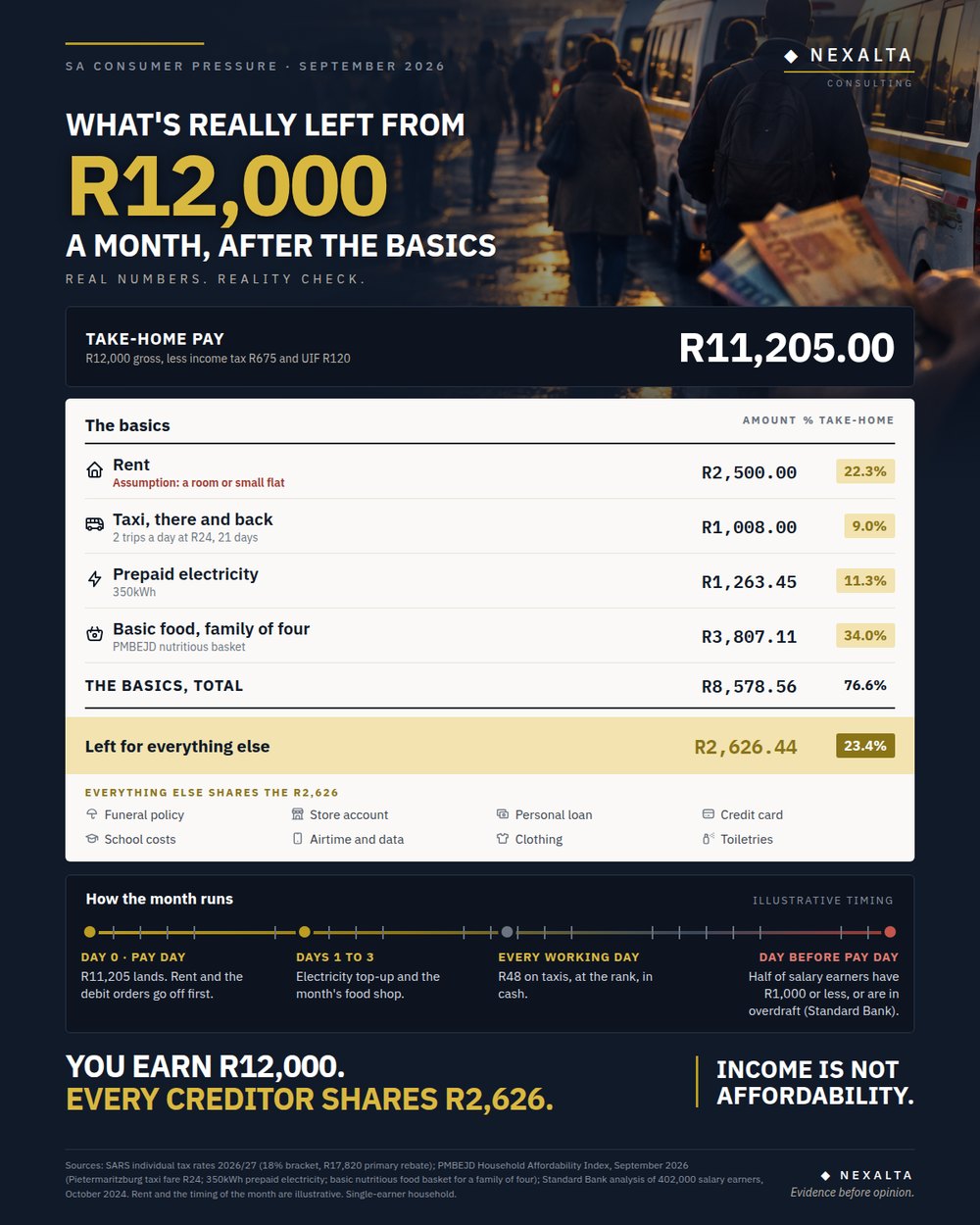
Take a customer earning R12,000 a month. After tax, rent, taxi fare, electricity and a basic food basket for a family of four, about R2,626 is left. That is what the funeral policy, the store account, the personal loan and the credit card all share.
Where you sit in the queue matters
When the money runs out before the month does, the order you collect in matters as much as the amount. Being near the front of the queue is something a collections operation can influence, through two levers that work together.
Pull. A debit order mandate set up when the account opens, dated to the day the customer is actually paid rather than a default 1st or 25th, and moved when their pay date moves. Most books only go after a stronger mandate once the account is already in arrears, which is exactly when the customer is least willing to give one.
Push. When a customer agrees to pay, a payment request on their phone while they are still on the call turns the promise into money before the rest of the month gets to it.
Pull gets you paid on pay day. Push picks up what pull misses, at the moment the customer says yes. Most operations need both.
Sources
- SARS individual tax rates 2026/27 (18% bracket, R17,820 primary rebate); UIF at 1%
- PMBEJD Household Affordability Index, September 2026 (Pietermaritzburg taxi fare R24 a trip, two trips a day over 21 days; 350kWh prepaid electricity; basic nutritious food basket for a family of four R3,807.11)
- Standard Bank, "Half of salary earners have nearly empty accounts before payday", 22 October 2024
- DebtBusters Debt Index, Q2 2026
- Rent of R2,500 and the single-earner household are illustrative assumptions.
Where does your book sit?
The Nexalta diagnostic replaces assumptions with evidence from your own operation.
Contact